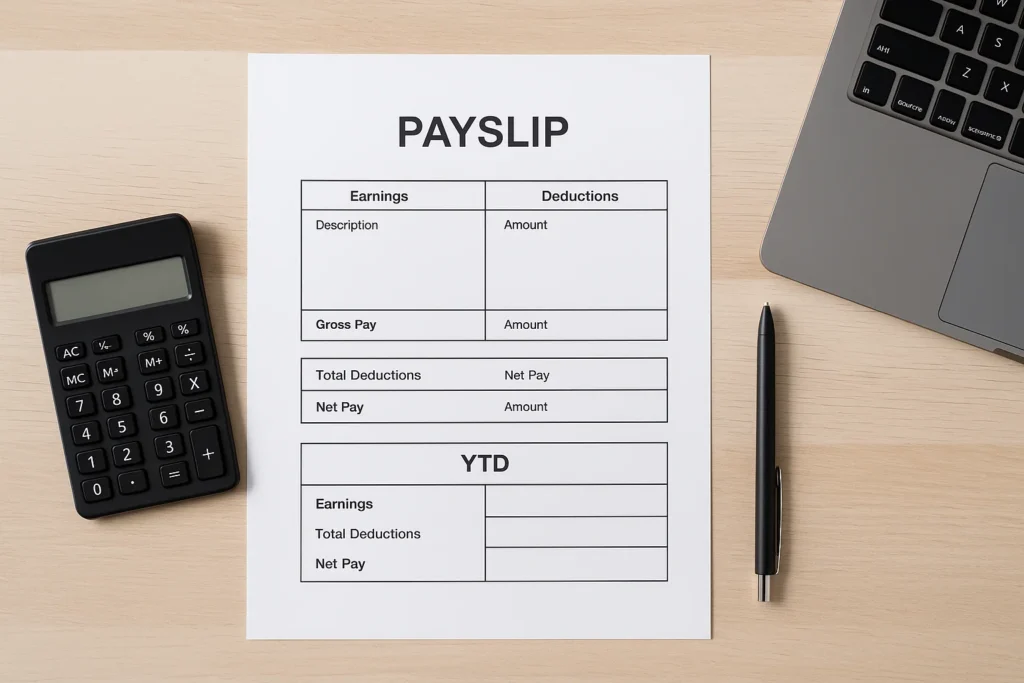
YTD Year to Date.
The numbers beside it look big, almost confusing. Is this extra money? Is it something you owe? Do you ignore it, or is it important?
Here’s what matters:
YTD is one of the most useful parts of your payslip. It tells the story of your earnings over time not just this month, but from the start of the year until today. Once you understand it, everything about your payslip becomes clearer. Your salary, taxes, deductions, and even benefits begin to make sense.
Many students, new employees, and even long-time workers in the Philippines ask the same questions:
“What does YTD mean?”
“How do I calculate it?”
“What is it used for?”
“Do I need it for taxes or loans?”
Let me walk you through it slowly and confidently. By the end, you’ll understand YTD like someone who has been reading payslips for years.
What YTD Means in a Payslip
YTD stands for Year to Date.
In simple terms, it shows the total amount from January 1 up to your latest payday.
Think of it as your running total.
Every time you get your salary, your YTD updates. Every time tax is deducted, your YTD updates. Every time you pay for SSS, PhilHealth, or Pag-IBIG yes, your YTD updates too.
Here’s the easiest way to remember it:
YTD = All your earnings and deductions added together from the beginning of the year until now.
If you earned ₱15,000 from January to March, your YTD salary is ₱45,000.
If you paid ₱800 tax every month for three months, your YTD tax is ₱2,400.
It’s not complicated once you see the pattern and that pattern is the key to understanding your payslip.
Why YTD Matters in Your Payslip
You may wonder, “Why do companies even include this? Isn’t the monthly salary enough?”
Here’s the honest answer:
YTD gives you a bigger picture of your financial year.
It helps you track progress, spot errors, and prepare for important documents.
Let me explain why it matters.
1. It helps you know your total earnings for the year.
Maybe you’re applying for a loan or scholarship and they ask for your annual income. Instead of guessing, check your payslip’s YTD section.
2. It shows if your salary is consistent each month.
If one month looks different, you can check why. Maybe overtime changed, or a deduction was added.
3. It helps you confirm your tax payments.
In the Philippines, many employees use YTD data when checking BIR Form 2316 or preparing personal tax details.
4. It supports budgeting.
Seeing the total amount you’ve earned makes you more aware of how much you’re really bringing home.
5. It helps detect mistakes early.
Sometimes an employer enters an incorrect amount. YTD totals show that quickly.
Once you understand YTD, your payslip becomes less intimidating. It becomes a tool something you can actually use to make smart decisions.
Where You See YTD on Your Payslip
Most payslips have two columns:
- Current Pay / This Period what you earned or paid this month
- YTD Amount what you have earned or paid since January 1
You will usually see YTD next to items like:
- YTD Basic Salary
- YTD Overtime
- YTD Tax Withheld
- YTD SSS
- YTD PhilHealth
- YTD Pag-IBIG
- YTD Allowances
- YTD Net Pay
If your payslip is digital, you may even see a summary at the bottom showing all YTD totals in one place.
What Does YTD Mean on a Paycheck?
When you’re paid through a paycheck or payroll system, YTD works the same way.
It shows your cumulative earnings and deductions.
For example:
If your monthly salary is ₱18,000, and you receive your 5th payslip of the year:
YTD Salary = 18,000 × 5 = ₱90,000.
This helps you understand how much money has passed through your hands during the year, not counting bonuses or benefits.
How to Calculate YTD in a Salary Slip
Let’s break it down like a simple math exercise. You can calculate your YTD in three easy steps.
Step 1: Identify your monthly earnings and deductions.
This includes:
- Basic salary
- Overtime
- Night differential
- Holiday pay
- Allowances
- Tax
- SSS
- PhilHealth
- Pag-IBIG
- Other deductions (loans, contributions, etc.)
Step 2: Count how many salary periods have passed.
If you’re paid monthly and we’re in April, then you have four months.
If you’re paid every 15 days, count each payday since January.
Step 3: Multiply or add the amounts.
Here’s an example for salary:
₱20,000 per month
5 months worked
YTD Salary = ₱20,000 × 5 = ₱100,000
For deductions:
₱600 SSS per month
5 months
YTD SSS = 600 × 5 = ₱3,000
That’s all. No complicated formulas.
What Is the YTD Total in a Payslip?
Your YTD Total is the combined total of everything recorded since the start of the year.
Some payslips break it into:
- Total YTD Earnings
- Total YTD Deductions
- Total YTD Net Pay
This final net pay is the real amount you have taken home so far this year.
It’s a helpful metric when planning savings, budgeting, or checking how close you are to your yearly income target.
How to Calculate YTD Wages
To calculate YTD wages, simply add:
basic salary + overtime + allowances + commissions + incentives
Here’s an example with common Philippine payroll numbers:
- Basic salary: ₱15,000/month
- Overtime: ₱1,500/month
- Allowances: ₱1,000/month
If you’ve worked for 6 months:
Basic salary: 15,000 × 6 = ₱90,000
Overtime: 1,500 × 6 = ₱9,000
Allowances: 1,000 × 6 = ₱6,000
YTD Wages = ₱105,000
This number gives you a real sense of your productivity and contribution for the year.
YTD Meaning in Payslip Philippines
In Philippine payslips, YTD means exactly the same thing Year to Date but it’s especially important here because of mandatory government contributions.
A typical Filipino payslip includes YTD for:
- Tax (BIR withholding tax)
- SSS
- PhilHealth
- Pag-IBIG
- 13th month components (if credited early)
You’ll also see it used when employers compute:
- SSS loan eligibility
- PhilHealth annual contribution summaries
- Pag-IBIG loan requirements
- Income verification for schooling
So, if you’re working in the Philippines or planning to, learning YTD is a must.
YTD Tax Meaning in Payslip
YTD tax tells you how much total tax employer has withheld from your salary since January 1.
If your monthly tax deduction is ₱1,200, after 8 months:
YTD Tax = 1,200 × 8 = ₱9,600
This is useful when reviewing:
- Annual tax returns
- BIR Form 2316
- Tax refund requests
- Loan or visa applications
You don’t manually pay this amount your employer does it for you. You just need to understand it.
ERS NIC YTD Meaning in a Payslip
In some international companies (or BPOs with UK-style payroll), you might see:
ERS NIC YTD
Let me break it down:
- ERS = Employer
- NIC = National Insurance Contribution
- YTD = Year to Date
Together, it means:
Total employer-paid insurance contributions from the start of the year up to now.
This is not money deducted from your salary.
It’s what the employer pays on your behalf as part of legal or company requirements.
If you work for a UK-based employer in the Philippines (common in outsourcing), this may appear on your payslip.
YTD Amount on Payslip Meaning
When you see a YTD amount, remember:
It is a cumulative value, not a monthly value.
It tells you:
- How much you’ve earned so far
- How much has been deducted so far
- How much you’ve actually taken home so far
Understanding this helps you confirm whether your employer’s payroll process is accurate.
A Simple Example: YTD Payslip Template
Here’s a short sample so you can visualize it:
| Item | This Period | YTD Amount |
|---|---|---|
| Basic Salary | ₱18,000 | ₱90,000 |
| Overtime | ₱1,200 | ₱6,000 |
| SSS | ₱600 | ₱3,000 |
| PhilHealth | ₱400 | ₱2,000 |
| Pag-IBIG | ₱100 | ₱500 |
| Tax | ₱1,000 | ₱5,000 |
| Net Pay | ₱17,100 | ₱83,500 |
This is the structure most Filipino employees see today.
Quick Fact Box
Did you know?
Your 13th Month Pay is also calculated using your YTD salary.
If your YTD earnings are ₱240,000, your 13th month is:
240,000 ÷ 12 = ₱20,000
This is why keeping an eye on YTD helps you estimate bonuses.
Checklist: How to Read YTD in Your Payslip
Before you close your payslip next time, check these:
- Do your YTD earnings match the number of months you’ve worked?
- Are YTD deductions accurate based on monthly amounts?
- Did overtime or bonuses reflect correctly?
- Are SSS, PhilHealth, and Pag-IBIG totals correct?
- Does your YTD net pay seem reasonable?
This habit helps prevent payroll mistakes that can affect loans, benefits, and end-of-year taxes.
Mini Story: A Common YTD Moment
One college intern in Manila once told me she never looked at the YTD section.
She thought it was “just a bunch of numbers.”
Months later, she applied for a scholarship.
They asked for her total income for the year.
She panicked she didn’t keep salary records.
But her payslip did.
Her YTD showed everything she needed.
She got her scholarship because she could provide accurate information.
That’s what YTD can do quietly help you when you least expect it.
Frequently Asked Questions
1. Is YTD the same as annual salary?
Not exactly.
It becomes your annual salary only at the end of the year.
2. Does YTD include bonuses?
Yes, if they have already been paid.
3. Does YTD reset?
Yes, every January 1 your YTD goes back to zero.
4. Can YTD help detect payroll errors?
Definitely. Incorrect totals usually mean something was miscalculated.
5. Why is YTD important for loans?
Banks often check total yearly income, not just monthly salary.
A Simple Way to Remember YTD
Think of your salary year as a running scoreboard.
Every payday, you gain points. YTD shows your score.
The higher it goes, the clearer your financial progress becomes.
Closing Thoughts
Understanding YTD meaning in a payslip may seem small, but it’s a skill that helps you in school, work, and life. It strengthens your financial literacy and gives you control over your income records.
The more you understand your payslip, the easier it becomes to plan your future, track your salary, and catch mistakes before they affect you.
So the next time you get paid, pause for a moment. Look at your YTD column.
It’s not just numbers it’s your year’s story so far.
Keep learning, keep checking, and remember: your payslip is your guide, not your enemy.
Learning never stops and you’re doing great.

Liam Brown guides students in research, thesis writing, and vocabulary. With clear step-by-step advice, he empowers learners to build strong academic and lifelong study skills.