And honestly, many people feel the same even working adults.
Here’s what matters: understanding payroll and payslip gives you control over your money.
You know what you’re earning, what’s being deducted, and whether everything is correct. For students preparing for internships, first jobs, or business careers, this knowledge saves confusion and builds confidence.
In this guide, we’ll walk through everything what payroll means, how it works, what a payslip contains, and why both matter. We’ll keep things simple, practical, and connected to real life in the Philippines.
Let’s start with the basics.
What Is Payroll?
When you hear the word payroll, think of the entire system a company uses to pay its employees. It’s the process, the records, the calculations, and the schedule all combined.
Here’s a simple way to picture it:
Imagine a teacher checking assignments for the whole class. Payroll works the same way, but instead of grades, it handles salaries.
Payroll includes:
- Calculating monthly salaries
- Recording overtime, leaves, bonuses
- Deducting taxes and government contributions
- Preparing payslips
- Releasing salary through bank, cash, or digital wallet
- Keeping records for compliance
In short:
Payroll = The full system of salary management.
A Quick Fact
According to DOLE guidelines in the Philippines, companies must keep payroll records and payslips to protect employee rights. This ensures transparency and fairness in the workplace.
Mini Story
One HR intern I trained, Angela, once asked, “Sir, why do we spend so much time on payroll every cutoff?”
I said, “Because people work hard, and payroll ensures they get exactly what they earned not more, not less.”
She smiled and replied, “That makes payroll feel like a responsibility, not just a task.”
And she was right.
What Are the Three Types of Payroll?
Payroll systems can look different depending on the company, size, and tools they use. But generally, there are three main types:
1. Manual Payroll
This is traditional and usually done using:
- Excel
- Calculators
- Paper logbooks
Pros:
- Cheap
- Simple for small businesses
Cons:
- Prone to human error
- Time-consuming
- Hard to store and organize
A neighborhood sari-sari store with 3 employees might use this method.
2. Outsourced Payroll
Some companies hire external professionals to manage payroll.
Pros:
- Saves time
- Reduces errors
- Ensures compliance
Cons:
- Costly
- Less control
Medium companies often do this.
3. Automated Payroll (Software-Based)
This is the modern standard.
Companies use tools like:
- SAP
- QuickBooks
- FreshBooks
- Sprout HR (popular in the Philippines)
- Internal HRIS systems
Pros:
- Fast
- Accurate
- Easy record-keeping
- Auto-calculated deductions
Cons:
- Monthly subscription cost
- Needs training
Automated payroll is the most common today, especially for companies with 50+ employees.
Payroll vs Payslip: What’s the Difference?
This is one of the most confusing questions for beginners, so let’s break it down clearly.
Payroll = The system or process
Payslip = The document you receive
Think of it like this:
Payroll is the kitchen where the food is prepared.
Payslip is the plate that arrives at your table.
Their connection is simple:
Payroll produces the payslip.
Quick Comparison Table
| Feature | Payroll | Payslip |
|---|---|---|
| Meaning | Salary calculation system | Salary record for employee |
| Used By | HR, accountants, company | Employees |
| Purpose | Manage payment | Show earnings and deductions |
| Format | Software, records | Paper or digital file |
| Frequency | Ongoing | Every payday |
Whenever you get paid whether semi-monthly (15th & 30th), weekly, or monthly payroll runs behind the scenes to process the amount written on your payslip.
What Is a Payslip?
A payslip (also called salary slip or pay stub) is a document that shows:
- How much you earned
- What was deducted
- What you will receive (net pay)
Companies provide payslips to employees every payday.
This is your proof of income.
It usually comes in PDF or printed form.
Why Is a Payslip Important?
You may need your payslip for:
- Bank loans
- Visa applications
- Rental applications
- Government transactions
- Pag-IBIG, SSS, PhilHealth updates
- Employment verification
- Personal budgeting
A payslip protects both the employee and the company by providing transparency.
What Information Appears in a Payslip?
Let’s break down the typical sections you’ll see.
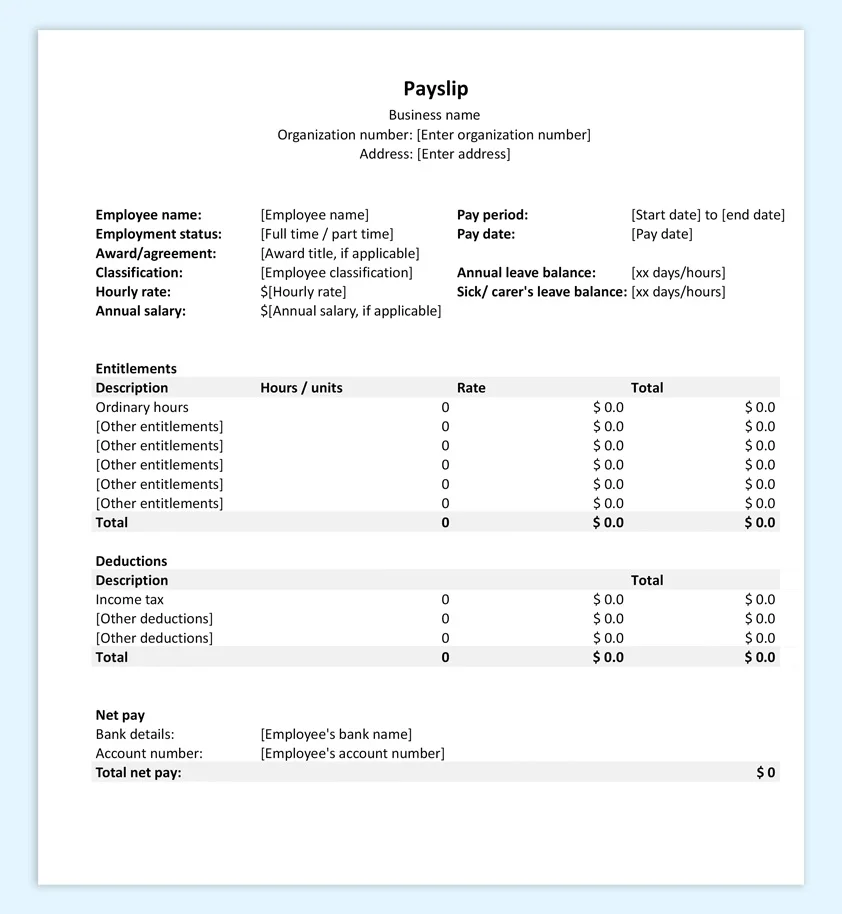
1. Employee Information
- Name
- Employee number
- Position
- Department
2. Payroll Period
This tells you the dates covered (e.g., Nov 1–15).
3. Earnings
This includes:
- Basic salary
- Overtime pay
- Night differential
- Holiday pay (regular & special)
- Allowances (transport, meal, etc.)
- Bonuses (13th month, incentives)
4. Deductions
Common Philippine deductions include:
- SSS
- Pag-IBIG
- PhilHealth
- Tax (Withholding tax)
- Late/absences
- Cash advances
- Uniform or company loans
5. Net Pay
This is the most important part.
It shows how much will go to your bank or payroll account.
Example Scenario
A worker named Jason earns ₱20,000 monthly.
For this cutoff, his earnings include a bit of overtime.
After SSS, PhilHealth, Pag-IBIG, and tax, his take-home pay becomes ₱9,200.
Seeing the breakdown helps him budget better and understand where his money goes.
How Payroll Works Step-by-Step
Payroll might look complicated, but the process is usually the same in every company.
Here’s a simple 7-step version that even beginners can follow:
1. Gather employee data
Includes:
- Basic salary
- Attendance
- Overtime
- Leaves
- Schedule
- Allowances
2. Record timekeeping
From biometrics, logbooks, or online systems.
3. Compute gross pay
This is the total before deductions.
4. Deduct mandatory contributions
Based on government tables (SSS, Pag-IBIG, PhilHealth).
*5. Apply taxes and other company deductions
6. Compute net pay
This is the amount employees receive.
7. Release payroll and payslips
Classroom Insight
In research, we call this a linear process something that moves from Step A to Step Z in a predictable way. Payroll works the same way, and that’s why it can be automated easily.
Salary Slip in Payroll: What Does It Mean?
A salary slip is simply the payslip generated from the payroll system.
When HR finishes calculations, the system automatically creates your payslip.
Your salary slip is the final output of all payroll data.
Common Mistakes People Make When Reading Payslips
Here are the errors employees often make:
1. Checking only net pay
They ignore deductions and earnings.
2. Not matching attendance to earnings
Overtime or absences sometimes appear incorrect.
3. Ignoring tax brackets
This leads to confusion on why deductions change.
4. Not keeping a record
Payslips must be saved for personal and official use.
5. Not asking HR when confused
Payroll teams are trained to explain breakdowns.
A Simple Technique to Read and Understand Any Payslip
Here’s a student-friendly method I teach in seminars:
STEP 1 Find your gross pay
“That’s your full salary before anything is removed.”
STEP 2 List all deductions
Group them:
- Government
- Company
- Loans
- Taxes
STEP 3 Subtract deductions manually
This helps you confirm accuracy.
STEP 4 Check the payroll period
Make sure you’re being paid correctly for the right dates.
STEP 5 Save your payslip file
Create a folder labeled:
“Payslips 2025”
This builds good financial habits early.
Why Students Should Learn Payroll Early
You might wonder:
“Sir, I’m still in school. Why am I learning payroll?”
Here’s the truth:
Understanding payroll prepares you for the real world faster than you think.
Students Learn:
- How salaries are computed
- How taxes work
- How companies manage employee compensation
- How to check if employers are paying fairly
- How to read financial documents
- How to understand job offers
A student who understands payroll will enter the workplace with more confidence.
Quick Checklist: Before Signing a Job Contract
Use this when evaluating your first job:
- What is the basic salary?
- Is the pay monthly, weekly, or semi-monthly?
- What are the deductions?
- Are there allowances?
- Does the company give 13th-month pay?
- When is the cutoff and payday?
- Is there night differential?
- Do they provide a payslip every payday?
These questions help you avoid confusion and ensure transparency.
Frequently Asked Questions (FAQ)
1. What is payroll?
Payroll is the system companies use to calculate and distribute employee salaries.
2. What is a payslip?
A payslip is a document showing your earnings, deductions, and net pay.
3. What is the difference between payroll and payslip?
Payroll is the process.
Payslip is the output.
4. What are the 3 types of payroll?
Manual, outsourced, and automated.
5. Is a payslip required by law?
Yes. Employers must provide payslips to employees to ensure salary transparency.
6. Can students benefit from learning payroll?
Absolutely. It teaches financial literacy and employment readiness.
Motivational Closing
You made it this far which means you’re already ahead of many new workers. Payroll and payslips might seem technical at first, but once you understand them, they give you real confidence. They help you manage your money, understand your rights, and prepare for adult life.
Learning never stops.
And the more you understand how salaries work, the stronger your financial future becomes.
If there’s one thing to remember:
Your payslip tells your financial story. Read it. Understand it. Own it.

Liam Brown guides students in research, thesis writing, and vocabulary. With clear step-by-step advice, he empowers learners to build strong academic and lifelong study skills.