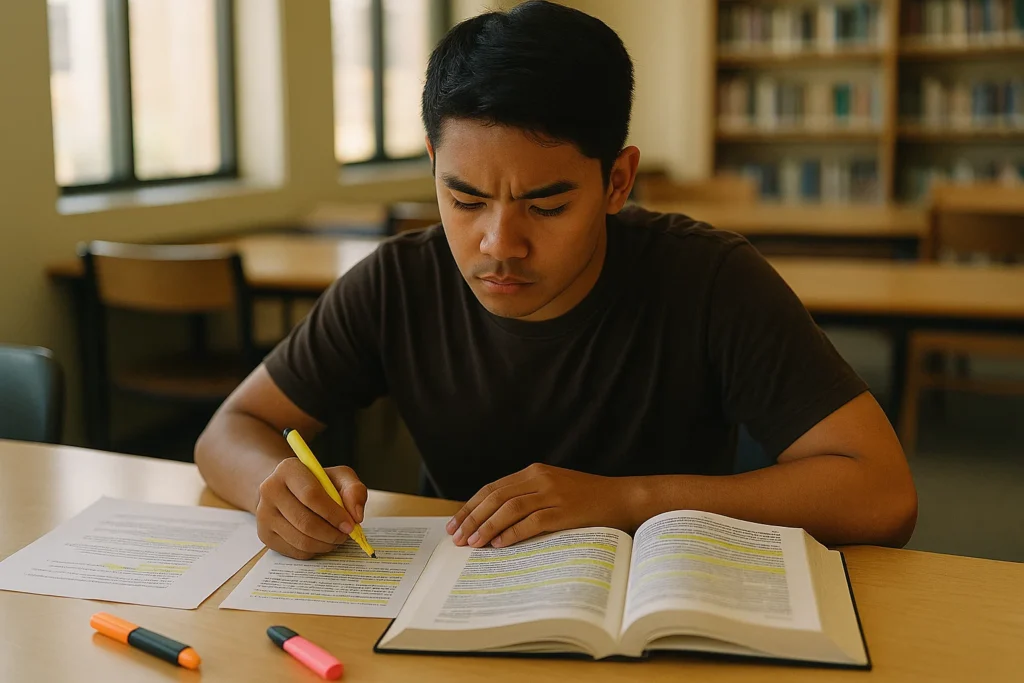
“I haven’t even gone to college yet,” she thought. “Is there still a way I can qualify?”
That’s when she discovered the Sub Professional Civil Service Exam (CSE) a test designed for people like her: hardworking, determined, and ready to start their career in government service even without a degree.
If you’re in the same situation a student, job seeker, or even someone looking for a career change this guide will walk you through everything you need to know about the Sub Professional Civil Service Exam, from its meaning to the coverage, requirements, and real-world benefits.
💡 What Is the Sub Professional Civil Service Exam?
The Sub Professional Civil Service Exam (CSE Sub-Pro) is one of the two levels of examinations conducted by the Civil Service Commission (CSC) in the Philippines. It’s designed for individuals who aim to work in clerical or administrative support positions in the government.
In simple terms, passing this exam proves that you have the basic knowledge, skills, and values needed to perform entry-level tasks in public service.
Definition Explained:
“Sub-professional” means below professional level, referring to jobs that don’t require a college degree but still demand skill, reliability, and integrity.
According to the Civil Service Commission, those who pass this level gain Career Service Sub-Professional Eligibility, which allows them to apply for first-level government positions such as clerks, data encoders, receptionists, and administrative aides.
🧾 Quick Fact
The Civil Service Exam was established under Presidential Decree No. 807, also known as the “Philippine Civil Service Law,” to ensure that government employees are hired based on merit, not connection.
🧭 Difference Between Sub-Professional and Professional Civil Service Exam
To understand where you stand, let’s first clarify the difference between the two main types of Civil Service Exams in the Philippines.
| Feature | Sub-Professional Exam | Professional Exam |
|---|---|---|
| Eligibility Level | First-level positions | Second-level positions |
| Education Requirement | High school graduate or college undergraduate | Usually college graduate |
| Job Positions Qualified For | Clerical and administrative roles | Technical, supervisory, or managerial roles |
| Exam Language | English and Filipino | English and Filipino |
| Exam Duration | 2 hours and 40 minutes | 3 hours and 10 minutes |
| Passing Score | 80% | 80% |
| Example Jobs | Clerk, Record Keeper, Administrative Aide, Messenger | Teacher, Engineer, Accountant, Officer |
So, if you’re aiming for office-based or support staff roles, the Sub-Professional exam is the right path for you. It’s the first step toward building a stable and respectable career in government.
🎯 Who Can Take the Sub-Professional Civil Service Exam?
The good news is that any Filipino citizen can take the exam as long as you meet a few basic requirements.
Minimum Qualifications:
- You must be at least 18 years old on the date of application.
- You must be a Filipino citizen with good moral character.
- You should not have been convicted of any crime involving moral turpitude.
- You should not have been dishonorably discharged from military or government service.
- You must not have taken the same level of exam within the last 3 months.
Educational Requirement:
- High school graduates and college undergraduates are both qualified to take the Sub-Professional Exam.
- There’s no requirement to be currently enrolled or to have a degree.
That’s what makes this exam so empowering it opens government opportunities to thousands of Filipinos regardless of their financial or educational background.
🧩 Exam Coverage: What to Expect
Understanding what’s inside the exam is half the battle won.
The Sub-Professional exam focuses on basic skills and competencies that are needed for clerical or administrative jobs.
Here’s the official coverage of the CSE Sub-Professional level:
| Subject Area | Percentage | Description |
|---|---|---|
| Clerical Ability | 40% | Tests filing, sorting, and office procedure knowledge. |
| Numerical Ability | 20% | Basic math skills: addition, subtraction, multiplication, division, percentages, and problem-solving. |
| Verbal Ability | 40% | English and Filipino grammar, vocabulary, reading comprehension, spelling, and correct usage. |
| General Information | Included | Basic Philippine Constitution, current events, environment, and government facts. |
📘 Tip from Alex:
Don’t underestimate the “easy” questions they’re designed to check accuracy and consistency, not just knowledge. So practice answering under time pressure!
📚 How to Prepare for the Sub-Professional Civil Service Exam
Preparing for the Civil Service Exam can feel overwhelming at first, but with a clear plan, it becomes manageable even enjoyable.
Here’s a step-by-step study strategy you can follow:
1. Know the Exam Coverage
Start by downloading the latest CSC Exam Guide or checking the Civil Service Commission website. Knowing what topics appear most often helps you prioritize your study time.
2. Create a Study Schedule
Study a little each day instead of cramming.
Example:
- Monday – Clerical Ability
- Tuesday – Numerical Ability
- Wednesday – Verbal Ability
- Thursday – Review and Practice
- Friday – General Information
3. Use a Trusted Reviewer
There are plenty of Sub-Professional Civil Service Exam reviewers available in bookstores and online (including free PDFs).
Look for materials that include:
- Sample questions and explanations
- Time-based practice tests
- Grammar and math drills
4. Practice Time Management
The exam has 170 items and lasts around 2 hours and 40 minutes.
That means you have less than a minute per question.
Practicing under timed conditions trains your brain to focus and avoid overthinking.
5. Strengthen Weak Areas
If you struggle in math, focus more on Numerical Ability. If you find grammar tricky, read more English articles and practice correcting sentences.
6. Rest and Recharge
Studying hard is important but resting is equally vital. Sleep helps memory retention.
Remember: your mind works best when it’s well-rested, not when it’s exhausted.
📖 Study Says
A 2024 CSC report found that only about 15%–20% of examinees pass the Civil Service Exam nationwide each year.
Most who fail report poor preparation or lack of practice.
This shows that studying strategically not just studying long makes the difference.
👔 Jobs You Can Get with Sub-Professional Eligibility
Passing the Sub-Professional Exam means you now have first-level eligibility in the Civil Service. That makes you qualified for entry-level government positions in both local and national agencies.
Here are some examples of Sub-Professional Civil Service Jobs:
| Job Title | Agency/Department | Typical Monthly Salary (2025) |
|---|---|---|
| Administrative Aide | Department of Education (DepEd), LGUs | ₱15,000–₱20,000 |
| Clerk / Office Assistant | Bureau of Internal Revenue (BIR), Department of Health | ₱14,000–₱18,000 |
| Data Encoder | National Statistics Office | ₱15,000–₱19,000 |
| Record Keeper | Department of Public Works and Highways (DPWH) | ₱13,000–₱18,000 |
| Utility Worker / Messenger | Various local offices | ₱12,000–₱16,000 |
As you gain experience, you can later take the Professional Level Exam to qualify for higher positions.
🧮 Passing Score and How It’s Calculated
To pass the Sub-Professional Civil Service Exam, you need to get a rating of at least 80%.
Each question is worth one point, and there’s no penalty for wrong answers so make sure to answer everything, even if you’re unsure.
Quick Tip:
If you’re running out of time, don’t leave blanks. Use elimination remove obviously wrong answers, then choose the most logical one.
📝 How to Apply for the Sub-Professional Exam
You can apply through two main modes: Pen-and-Paper Test (PPT) or Computerized Examination (COMEX).
1. Filing Period
The CSC usually announces exam schedules twice a year (March and August).
It’s best to check the CSC official website (csc.gov.ph) or their Facebook page for updates.
2. Application Requirements
Here’s what you’ll need:
- Fully accomplished application form (CSC Form 100)
- Four (4) passport-size ID photos
- Original and photocopy of valid ID (PhilSys, Passport, Driver’s License, etc.)
- Exam fee: ₱500 (for PPT) or ₱680 (for COMEX)
- Health declaration form (if required by local office)
3. Where to Apply
You can submit your application to the nearest Civil Service Commission Regional Office or any field office. Slots may be limited, so apply early!
🧠 Exam Day Tips
Here’s what you should keep in mind before the big day:
Night Before the Exam
- Sleep early.
- Prepare your things (ID, exam stub, pencils, snacks).
- Review only light materials no cramming.
On Exam Day
- Be at the venue at least 1 hour early.
- Bring your valid ID, examination notice, pencil (No. 2), eraser, and black ballpen.
- Listen carefully to proctors.
- Keep calm remember, you’ve prepared for this!
After the Exam
- Check the CSC website for official result announcements.
Results usually come out 45–60 days after the exam date.
💬 Angela’s Story, Continued
A few months after taking the test, Angela received her results. She passed with an 83.75% rating.
She proudly printed her Certificate of Eligibility and applied for a clerical position at her local government office.
Today, she works as an Administrative Aide, helping process documents and assisting the public a simple but meaningful start to her career.
“Passing the exam gave me confidence,” she shared. “It wasn’t just about getting a job. It felt like I opened a door to my future.”
🧾 FAQs
1. Who can take the Sub-Professional Civil Service Exam?
Any Filipino citizen aged 18 and above, regardless of educational background, as long as they meet moral and legal qualifications.
2. What is the passing score for the Civil Service Exam?
You need at least 80% to pass.
3. What’s the difference between Professional and Sub-Professional?
The Sub-Professional is for clerical or entry-level jobs, while the Professional is for technical or supervisory roles.
4. What kind of jobs can I apply for after passing the Sub-Professional Exam?
You can apply for first-level positions such as clerk, data encoder, utility worker, or admin aide.
5. Can I retake the exam if I fail?
Yes, but you must wait at least 3 months before retaking the same level of the exam.
📋 Checklist Before Taking the Exam
✅ Verify eligibility requirements
✅ Prepare valid ID and 4 passport-size photos
✅ Fill out CSC Form 100 correctly
✅ Review the exam coverage (Clerical, Numerical, Verbal, General Info)
✅ Bring test materials (No. 2 pencil, eraser, black pen)
✅ Arrive early at the testing center
✅ Stay calm and confident during the exam
🌟 Motivational Closing: Your Effort Matters
The Sub-Professional Civil Service Exam is more than just a test it’s a stepping stone toward a better life.
Many Filipinos think government jobs are only for college graduates or people with connections. But the truth is, eligibility is earned by merit, not privilege.
Whether you’re a student, a working parent, or a dreamer hoping for stability, remember this:
Passing this exam means you’ve proven your competence, discipline, and dedication.
As Alex Smith always says in his workshops:
“Exams don’t define your intelligence they measure your effort, consistency, and belief in yourself.”
So study smart, trust your preparation, and keep that goal in sight. The opportunity you’ve been waiting for might just be one test away.
📘 Key Takeaway
The Sub Professional Civil Service Exam is your gateway to starting a career in government service. It’s open to all Filipinos, regardless of educational attainment, and focuses on practical skills like clerical work, communication, and problem-solving. With focus, practice, and determination, you can pass and open new doors to stability and purpose.

Alex Smith mentors young learners in debate and writing, turning complex expression into simple strategies. He inspires students to speak with confidence and write with clarity.