What makes this guide even more helpful is that we’ll also look at related tools around the COA ecosystem, like the intranet coa gov ph login, coa apps gov ph, coa apps ALEMS, and COA digital signing service. These platforms work together to support your everyday tasks. Understanding how they connect will give you a bigger picture of how COA’s digital services are structured. Think of it like learning how to navigate a new school or workplace. At first, everything looks complicated, but once you know where things are placed, you can move around with ease. This guide is meant to bring that sense of clarity into your daily digital routine.
Why the COA Payslip Portal Matters
Let’s take a moment to understand the importance of the portal coa gov ph payslip before diving into the steps. Your payslip isn’t just a piece of paper or a digital file it’s a document that summarizes your work life: your salary, deductions, contributions, and benefits. Many employees keep copies of their payslips for loan applications, visa requirements, insurance processes, and personal record-keeping. Having them available online means you don’t have to dig through drawers or request old files from your office. Everything is stored securely inside the portal, and you can download it whenever you need it.
Imagine it this way: For years, government offices relied on printed documents, and employees often lined up just to get copies. But with digital transformation finally growing across the Philippines, agencies like the Commission on Audit are moving toward online systems. The portal coa gov ph payslip online feature is a product of that shift. It’s a step toward convenience, saving time, and letting you handle your information independently. There’s something empowering about being able to access your records yourself, just like students feel confident when they know how to check their grades or assignments online.
This is especially helpful for busy COA employees who want everything organized. Payslip details like allowances, hazard pay, deductions, and GSIS contributions can help you understand your monthly budget better. Once you’re familiar with the portal, you’ll be able to track changes quickly. And since everything is stored safely, you don’t have to worry about misplacing documents. Think of it as having a mini digital cabinet that keeps your salary history in order.
Understanding the COA Intranet and Its Connected Systems
The portal coa gov ph payslip is part of a larger digital environment used by COA employees. Before going into the login steps, let’s explore a few related tools so you know how everything fits together. When employees mention the intranet coa gov ph login, they are referring to the internal system where staff members access work-related tools, announcements, and online services. It’s like entering the main hallway of a school where different rooms and offices lead to different tasks. From the intranet, you can navigate to various COA apps depending on what you need for the day.
One commonly used tool is coa apps gov ph, which serves as a central place for applications like ALEMS (Audit Learning and Monitoring System), HR tools, attendance systems, or other online platforms. When you hear about coa apps ALEMS or coa ALEMS login, these refer to portals used by COA personnel for training and learning. These systems help employees complete required modules and track learning progress. They are closely connected to the intranet, making it easier for personnel to go from one system to another.
Another relevant tool is the COA digital signing service, which is becoming essential as government offices embrace paperless processes. This tool allows authorized employees to affix secure, verified digital signatures on official documents. It’s especially helpful for workflows where signed reports or forms are needed. Understanding these connected systems gives you a smoother experience because you’ll know where to go even when tasks overlap. And when you become confident navigating the intranet, you’ll also find it easier to access your payslip without feeling lost.
Creating Your Payslip Account on portal coa gov ph
Now that you understand the system behind the scenes, let’s talk about how to create your account for the portal coa gov ph payslip online registration. The registration process may feel intimidating at first, but it’s actually designed to be simple and employee-friendly. Think of it like registering for an online class or creating a new school portal account. You’ll need a few basic details, and once you set up everything correctly, the system will recognize you each time you log in.
To start, visit the official payslip portal link provided by your HR or department. Usually, the registration button is visible on the main page. When you click it, you’ll be asked to provide your employee information such as your COA ID number, full name, email address, and other required details for verification. It’s important to write everything accurately because the system will match your data with COA’s personnel records. Just like in research work, accuracy is your best friend here.
After filling out the form, you may receive a confirmation message or a verification email. Check your inbox and spam folder to be sure you don’t miss anything. Once confirmed, you can set up your username and create a strong password. A good password contains a mix of letters, numbers, and symbols something secure but easy for you to remember. When everything is complete, your registration becomes active. Think of this moment as receiving your student ID for the portal. You’re now ready to access your payslip anytime.
How to Log In and Access Your COA Payslip
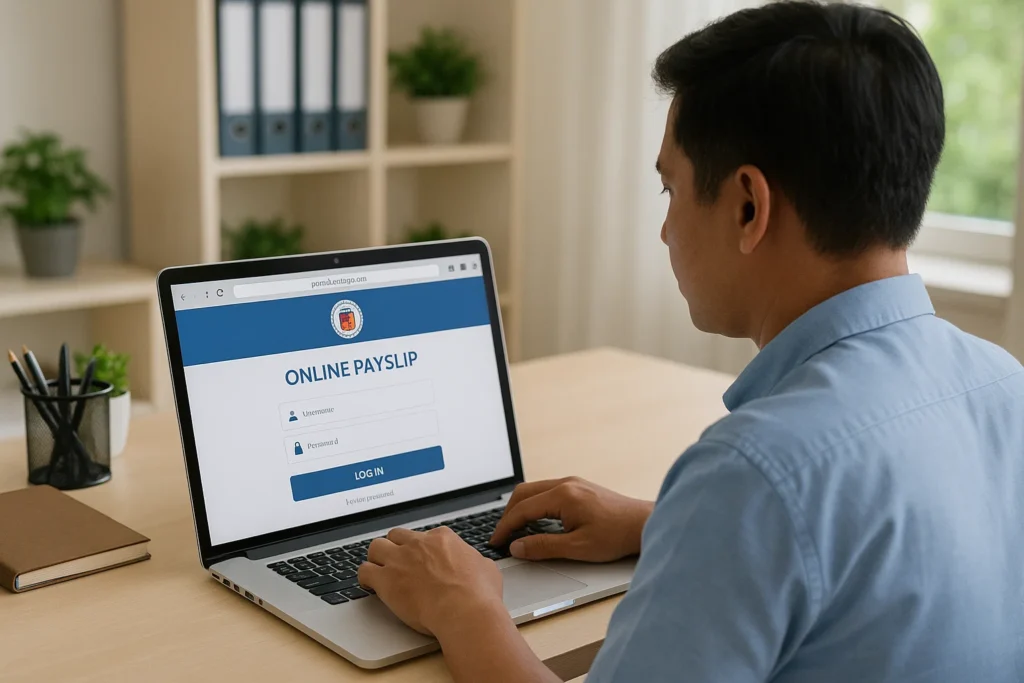
Now that your account is ready, let’s go through the portal coa gov ph payslip login process. This part is straightforward and doesn’t require technical knowledge. Start by opening the official login page. Enter your username and password carefully, making sure there are no extra spaces. Many login issues happen simply because of mistyped passwords or old saved information from your browser. It helps to type your password slowly the first time to avoid simple errors.
Once inside the dashboard, you will see different options depending on your role and access level. Look for the section labeled “Payslip” or “Employee Records.” When you click it, the system will load your payslip list starting from the most recent month. You can click any month to download or view the details. Some employees prefer downloading the PDF so they can save it on their phone or laptop. Others prefer printing it immediately. It’s up to you which method feels more convenient.
Inside your payslip PDF, you’ll see familiar details: your basic salary, earnings, deductions, GSIS contributions, Pag-IBIG, PhilHealth, tax, and any allowances. These documents are formatted neatly so you can understand everything at first glance. If you’re checking for discrepancies or updates, having the online format helps because you can quickly compare one month to another. It feels similar to tracking your grades in school you get to see patterns and understand your progress.
Common Login Problems and How to Fix Them
Even with a smooth system, there may be times when you encounter login issues. Don’t worry this is normal, and most problems can be solved with simple steps. One common issue is forgetting your password. If this happens, look for the “Forgot Password” link on the login page and follow the reset instructions. The system will guide you through email verification before letting you create a new password. It’s similar to resetting your password for a social media account.
Another issue is account lockout. After multiple wrong login attempts, the portal may temporarily block your access for security reasons. This can feel frustrating, but it protects your information from unauthorized users. Wait for the lockout period to end, or contact your HR office if you need urgent access. They can coordinate with the system administrator to restore your account.
Sometimes, the issue is related to the browser. Clearing your cache or switching to a different browser often solves loading problems. If the website is under maintenance, try again after a few hours. Most employees experience these occasional lapses, but patience and basic troubleshooting usually solve the problem. And if your internet connection slows down, the portal may struggle to load pages. Connecting to a stable network helps ensure a smooth login experience.
How the COA Apps and ALEMS Support Your Work
The coa apps gov ph platform serves as the home for many COA online tools. If you spend a lot of time completing trainings or checking updates, you’ve probably used the COA ALEMS login system. ALEMS is like a virtual classroom where COA employees take required modules or refresh their knowledge on audit standards and guidelines. It is a helpful resource for self-improvement and fulfilling organizational requirements.
Another useful tool is the COA intranet portal app. Think of it as a private online community where employees access internal announcements, HR updates, memos, and productivity tools. It keeps everyone connected and informed without relying on paper memos pinned on bulletin boards. When you understand how these systems connect, you’ll see how COA has created a digital environment that supports your daily tasks.
These tools also reduce the need for physical meetings or printed documents, making work more efficient. And as digital systems continue improving, it becomes easier for employees to complete tasks from home or in the field. The convenience you gain from using these systems especially the payslip portal removes many daily frustrations and allows you to focus more on your core responsibilities.
Tips for Keeping Your Digital Records Safe
Now that you know how to use the portal coa gov ph payslip, it’s important to also learn how to keep your digital records safe. Security matters, especially when handling sensitive employee information like salary details. Begin by keeping your password private. Don’t share it with anyone, even close colleagues. It’s also good to change your password every few months.
Make sure your email is secure since it’s linked to your portal account. Enable two-step verification whenever possible. If you’re using a public or shared computer, always log out after checking your payslip. Avoid saving your password on unfamiliar devices. When downloading payslips, store them in a secure folder. If you prefer printing them, keep physical copies in a safe place at home.
These steps may seem simple, but they protect you from potential risks. Just like how you secure your school ID, personal card, or wallet, your online identity also needs careful handling. The goal is to make sure your information remains private while you enjoy the convenience of digital access.
Why Digital Payslips Are the Future in the Philippines
Digital transformation in the Philippines is growing steadily, especially in government offices. COA’s move toward online payslips is part of a bigger vision where services become faster, more reliable, and more accessible. Many agencies are reducing paperwork to focus on efficient digital delivery. This transition helps employees save time, contributes to eco-friendly practices, and reduces the need for storage spaces filled with printed documents.
Over time, expect more services to migrate online, including HR forms, evaluation documents, digital signatures, training records, and communication tools. That’s why learning how to manage your portal coa gov ph payslip account early prepares you for future digital upgrades. You’re not only improving your convenience you’re also embracing a modern way of working.
Checklist for COA Employees
Here’s a simple checklist to help you stay organized every month:
- Log in to your payslip portal to review your salary details.
- Compare this month’s payslip with previous months to track changes.
- Update your email regularly to keep receiving notifications.
- Use the COA intranet for announcements and HR updates.
- Access ALEMS for required training modules.
- Keep your password safe and update it periodically.
- Store downloaded payslips in a secure digital folder.
This checklist serves as a friendly reminder so you stay on top of everything without stress.
Final Thoughts
Learning how to use the portal coa gov ph payslip system gives you more control over your financial records and reduces the time spent requesting documents from your office. It’s a small skill with big benefits. Once you get used to it, checking your payslip becomes as easy as checking your email or opening a school portal. Each time you log in, you’re not just viewing a file you’re taking a step toward better organization and financial awareness.
Every Filipino employee deserves tools that make daily work easier, and this portal is built exactly for that. Use it with confidence, explore its helpful features, and let it support you in your journey as a dedicated COA worker. Keep learning, stay organized, and remember that small digital habits can make your work life smoother each month.

Liam Brown guides students in research, thesis writing, and vocabulary. With clear step-by-step advice, he empowers learners to build strong academic and lifelong study skills.