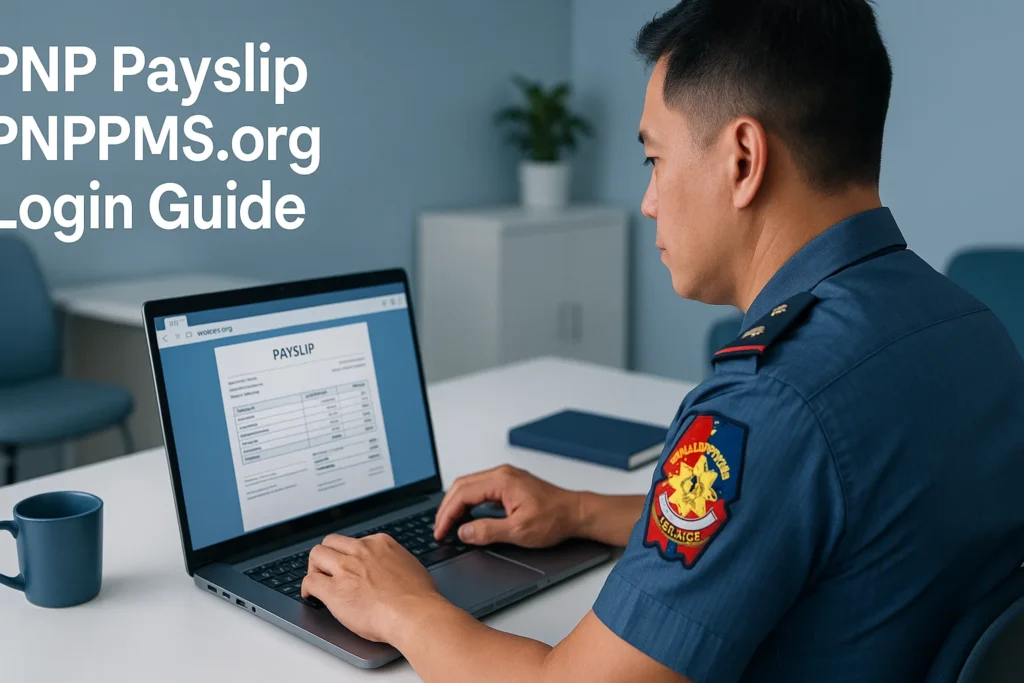
 When you’re working long hours, handling reports, or juggling duty schedules, the last thing you want is a confusing online system. That’s why the PNP Payslip PNPPMS.org portal exists. It gives every police officer a fast and organized way to check monthly payslips without lining up at the finance office.
Here’s the thing most officers discover: the portal works smoothly once you understand how it behaves. The login rules, the password format, the PAIS connection, and even the QR code all of them follow a pattern. Once you learn it, accessing your payslip takes less than a minute.
Let’s walk through everything in a calm, practical way. You’ll learn the login process, how to reset a forgotten password, what to do when the site won’t load, and how to use the portal safely on your phone.
Why the PNP Payslip Portal Matters
Before the online system, many officers had to wait for printed payslips or depend on administrative staff. Some handled overtime, allowances, or deductions without clear visibility. Today, the portal makes things simpler:
- You can check pay anytime.
- You get a complete breakdown of earnings and deductions.
- You avoid paperwork delays.
- You keep a digital record for loans, travel orders, and personal documentation.
According to recent digital transformation updates within Philippine government agencies, online HR systems have noticeably improved speed and accuracy. For police officers, this means more time on duty and less time on paperwork.
How to Log In to PNP Payslip on PNPPMS.org
Let’s start with the core steps. These steps work whether you’re on a phone, tablet, or computer.
Visit the Official Portal
Go to: https://pnppms.org/
This is the official system for the PNP Personnel Management and Information System.
Enter Your Username
Your username is usually your Badge Number or PNP Personnel ID.
Some units may use the PAIS ID, depending on your registration history.
Type Your Password
For first-time users, the default password often follows this pattern:
Lastname + DateOfBirth (MMDDYYYY)
Example: Santos01081985
If your unit gave you another format during induction or digital filing, use that instead.
Click Login
Once inside, look for Payslip / Monthly Income or Financial Records.
That’s it. If all details match, your payslip loads instantly.
Is There a PNP Payslip Mobile App?
A common question, especially from officers who prefer checking payslips during field operations.
Here’s the truth:
There is no official PNP Payslip mobile app yet.
But the good news is the portal works smoothly on mobile browsers like:
- Chrome
- Safari
- Edge
- Firefox
Just make sure your phone has a steady internet connection. Many officers save the portal link on their home screen for faster access.
Forgot Your PNP Online Payslip Password? Here’s the Fix
Everyone forgets passwords at some point. Luckily, the system gives several recovery options.
Option 1: Use “Forgot Password” on the Portal
The portal commonly asks for:
- Registered email
- Birthdate
- Employee ID or Badge Number
You’ll receive a reset link or a temporary password.
Option 2: Contact Your Admin Officer
Your HR/Finance or PAIS officer can reset your password manually.
Provide:
- Full Name
- Rank
- Unit / Station
- Badge Number
- Date of Birth
Keep your government-issued ID for verification.
Option 3: Check PAIS Details
Because the portal and PAIS are connected, updating your PAIS profile sometimes fixes login issues.
Most password-related issues happen when personal details (like a wrong birthdate) don’t match the system.
Understanding PAIS PNP and Why It Matters
The PAIS (Personnel Accounting Information System) is the central database for all police personnel.
Your payslip is generated based on PAIS details, including:
- Rank
- Appointment status
- Salary grade
- Position
- Unit assignment
- Allowances
If anything is wrong in PAIS, your payslip may show errors. That’s why officers are reminded to keep PAIS info updated especially after promotions or reassignments.
What Is the PNP Payslip QR Code Used For?
When you download your payslip, you may notice a QR code printed at the corner. It serves one purpose:
To verify authenticity.
When scanned, it confirms that the payslip came from the official PNPPMS system. This protects officers when using payslips for:
- Bank loans
- Travel or financial audits
- Housing or vehicle financing
- Official posting requirements
It’s a simple but smart security feature.
Troubleshooting Login Problems
Sometimes the portal refuses to load or keeps returning an error. Don’t panic. These are the most common reasons and quick fixes.
1. The Website Is Down
High traffic or system maintenance may temporarily block access.
Try again after 10–15 minutes.
2. Wrong Password Format
The system is sensitive to:
- Capital letters
- Missing numbers
- Extra spaces
Type your password slowly and double-check.
3. Outdated Browser
If the page doesn’t load, update your browser or switch to another one.
4. Incorrect PAIS Details
Wrong birthdate = login failure.
Ask your admin officer to confirm your records.
5. Device Security Settings
Some phones block pop-up windows.
Enable pop-ups for PNPPMS.org.
Simple Checklist Before Logging In
Here’s a quick guide every officer can keep in mind:
Make sure you have:
- Badge Number or Personnel ID
- Correct password format
- Updated birthdate and profile info
- Strong internet connection
- A secure device (no public WiFi during login)
These small habits prevent 90% of login issues.
Can I Use PNP Payslip PNPPMS.org on Any Device?
Yes. The system works on:
- Windows laptops
- MacBooks
- Android phones
- iPhones
- Tablets
The site automatically adjusts its layout based on your screen size.
One tip though: If you’re downloading payslips, use a phone with enough storage or send the PDF directly to your email.
How to Keep Your Payslip Safe
Payslips contain confidential data. Protect them by doing the following:
- Avoid logging in on public computers
- Do not share your password
- Download payslips only to secure folders
- Use QR verification when sending payslips for transactions
- Log out after every session
This helps prevent identity misuse, especially in financial transactions.
A Quick Example: Password Reset Scenario
To make everything clearer, here’s a short scenario many officers relate to.
Officer Dela Cruz forgot his password after months of not checking his payslip. He attempted several times but kept getting an “invalid credentials” error.
Here’s what he did:
- Used the Forgot Password option
- Entered his Badge Number and Birthdate
- Received a temporary password via email
- Logged in and changed it to a new one
- Updated his PAIS profile to avoid future issues
The whole process took less than five minutes.
Frequently Asked Questions (FAQ)
What is the official PNP payslip login website?
The official site is PNPPMS.org, the Personnel Management and Information System portal.
Is the PNP payslip mobile app available?
No official app exists yet. Use your mobile browser instead.
Can I recover my forgotten payslip password?
Yes, through the Forgot Password option or by contacting your unit’s admin officer.
Is the payslip with QR code valid for bank transactions?
Yes. The QR code verifies the document’s authenticity.
Are PAIS and PNPPMS the same?
PAIS stores your personal and employment data. PNPPMS uses that data to generate your payslips.
Final Thoughts
If you know the steps, accessing your PNP Payslip PNPPMS.org account becomes simple. Whether you’re checking your monthly salary, verifying deductions, or preparing documents for a loan, the portal is built to make your work-life easier.
Take a moment to understand the login pattern, keep your PAIS details updated, and store your payslips safely. Once you build the habit, the system works smoothly every month.
Learning never stops, and mastering these digital tools helps you stay organized, prepared, and confident both on duty and in daily life.

Liam Brown guides students in research, thesis writing, and vocabulary. With clear step-by-step advice, he empowers learners to build strong academic and lifelong study skills.